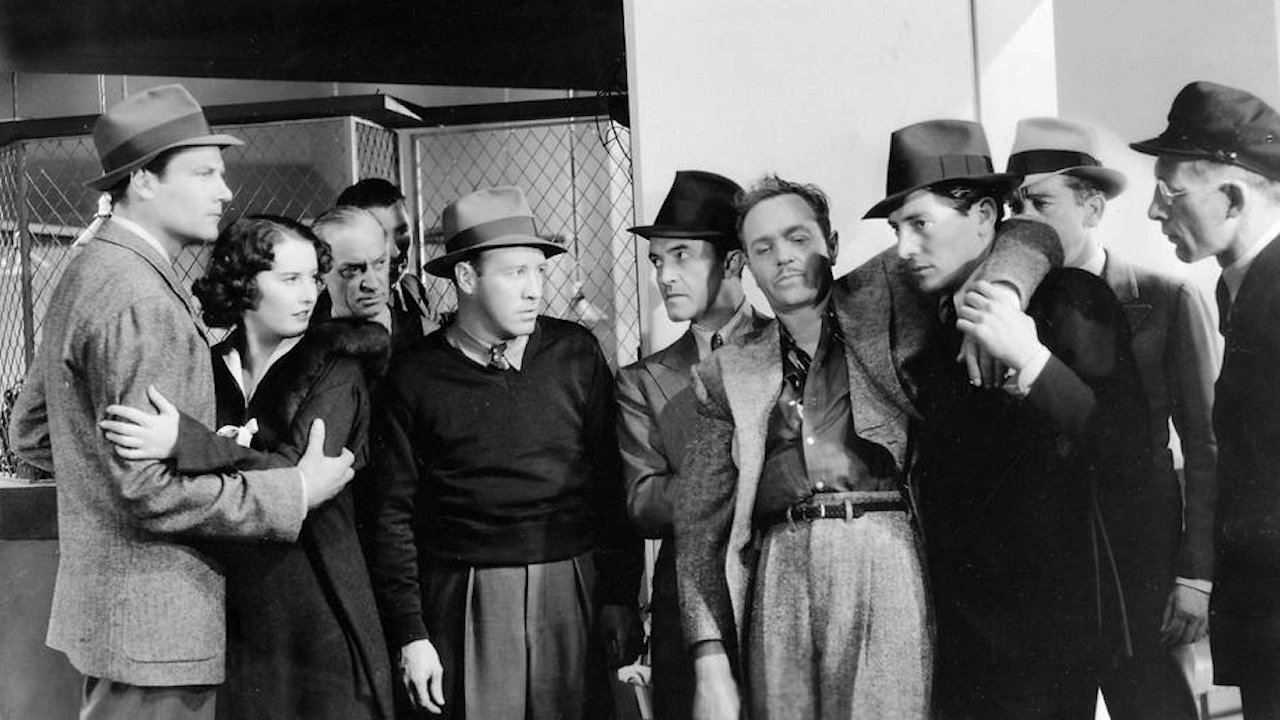
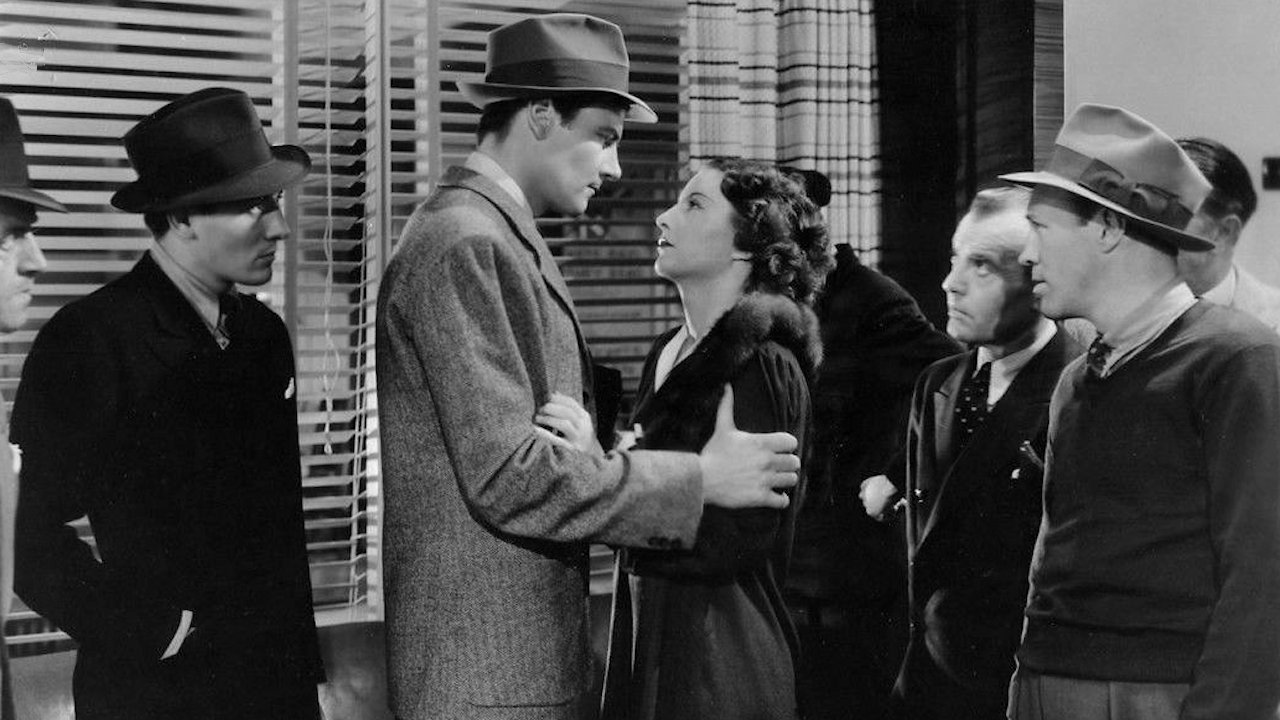
Thieves’ Highway (1949) Colorized 1949


🎥 Check more movies by director Alfred Santell
⭐ Check more movies starring Barbara Stanwyck
⭐ Check more movies starring Joel McCrea
⭐ Check more movies starring Lloyd Nolan
Internes Can’t Take Money (1937), the crime classic starring Barbara Stanwyck and Joel McCrea, was originally released in black and white — no official colour version was ever produced by the studio. What you are looking at is the professionally colorized restoration: every frame recoloured, available as an instant DRM-free HD (720p) download. You can judge it yourself — the colour preview plays on this page before you buy.
Buy Intolerance (1916) in color — D.W. Griffith’s monumental epic weaving four parallel stories of injustice and bigotry across the ages into one of the most ambitious films ever conceived. Starring Mae Marsh, Robert Harron, F.W. Muller, Sam De Grasse, Miriam Cooper, and Lillian Gish. The Story of the Ages — available now as an instant, DRM-free digital download.
D.W. Griffith’s Intolerance tells four interconnected stories spanning thousands of years, all united by the theme of humanity’s recurring cruelty and prejudice. In the modern story, set in contemporary America, The Dear One (Mae Marsh) and The Boy (Robert Harron) are a young couple struggling to survive in a harsh industrial city. The Boy falls into crime after losing his factory job when the hypocritical industrialist Arthur Jenkins (Sam De Grasse) slashes wages to fund his wife’s moral reform campaigns. The Friendless One (Miriam Cooper), a desperate woman of the streets, becomes entangled in the criminal underworld alongside The Musketeer of the Slums (F.W. Muller), a charismatic gangster who controls the neighborhood. When The Boy is falsely convicted of murder, The Dear One races against time to save him from the gallows while their infant child is seized by the same self-righteous reformers who caused their misery. In ancient Babylon, the magnificent city falls to the Persian conqueror Cyrus because religious intolerance and internal betrayal undermine its defenses, despite the heroic efforts of the Mountain Girl to warn King Belshazzar. In Judea, Christ walks among the people, preaching love and forgiveness, only to be condemned to crucifixion by the intolerant Pharisees. In Renaissance France, the young Huguenot lovers Brown Eyes and Prosper are caught in the horrific St. Bartholomew’s Day Massacre, when Catholic forces slaughter thousands of Protestants in a frenzy of religious hatred. Griffith intercuts between all four stories with increasing speed and intensity as each races toward its climax, with The Woman Who Rocks the Cradle (Lillian Gish) serving as the eternal, symbolic figure connecting all narratives — endlessly rocking her cradle as the ages pass and humanity repeats its cycles of intolerance and suffering. The modern story reaches a breathtaking climax as The Dear One pursues a speeding train carrying the governor’s pardon, desperate to reach the prison before The Boy is executed. The film’s scale is staggering, with the Babylonian sequences featuring some of the largest and most elaborate sets ever constructed in cinema history, populated by thousands of extras in a spectacle that remains awe-inspiring over a century later.
This professionally colorized version of Intolerance transforms D.W. Griffith’s colossal epic into a visual experience of unprecedented richness. The frame-by-frame colorization process brings the four distinct historical periods to vivid, differentiated life — the golden splendor of ancient Babylon with its towering walls, massive elephant sculptures, and shimmering royal courts; the dusty earth tones of biblical Judea with its sun-baked streets and humble garments; the rich crimson and gold of Renaissance France drenched in the blood of the St. Bartholomew’s Day Massacre; and the grey, industrial palette of modern America where poverty and hypocrisy grind the vulnerable into dust. Mae Marsh’s extraordinary performance as The Dear One gains heartbreaking immediacy in color, with her pale, anxious face and simple cotton dresses telling the story of desperate poverty more powerfully than any title card. Lillian Gish’s ethereal presence as The Woman Who Rocks the Cradle achieves almost spiritual luminosity in warm golden tones. The Babylonian sequences — featuring some of the most spectacular sets ever built — are revealed in their full intended glory, with the polychrome magnificence of the ancient world rendered in lapis blue, burnished gold, and deep terracotta. This colorized version of the classic movie preserves every frame of Griffith’s revolutionary vision while revealing the visual splendor that was always present but hidden within the original black and white photography, making this restored masterpiece essential viewing for any serious classic film enthusiast.
Intolerance is widely regarded as one of the most important and influential films in the history of cinema. Released in 1916, it was D.W. Griffith’s ambitious response to criticism of his previous film, The Birth of a Nation, and represented an attempt to create the most spectacular motion picture ever produced. The film pioneered techniques of parallel editing, cross-cutting between timelines, and epic-scale production design that influenced virtually every filmmaker who followed. The Babylonian set, built on Sunset Boulevard in Hollywood, was the largest film set ever constructed at that time, rising over 300 feet and covering acres of land, populated by thousands of costumed extras. The film’s innovative narrative structure — interweaving four separate stories across different historical periods — was revolutionary and directly influenced filmmakers from Sergei Eisenstein to Christopher Nolan. Although Intolerance was a financial disaster upon release, nearly bankrupting Griffith, its artistic influence has been incalculable. The Library of Congress selected it for preservation in the National Film Registry in 1989, recognizing it as one of the most culturally significant classic films ever produced. Film historians consistently rank Intolerance among the greatest achievements in the history of the medium.
What are the four stories in Intolerance?
Intolerance weaves together four parallel narratives: a modern American story of injustice against a young couple, the fall of ancient Babylon to Persian conquest, the crucifixion of Christ in Judea, and the St. Bartholomew’s Day Massacre in Renaissance France. All four stories are united by the theme of intolerance and bigotry destroying innocent lives across the centuries.
Why did D.W. Griffith make Intolerance?
Griffith created Intolerance partly as a response to the intense criticism directed at his previous film, The Birth of a Nation (1915), which was attacked for its racist portrayal of African Americans and glorification of the Ku Klux Klan. Intolerance was conceived as a grand statement against prejudice, bigotry, and injustice throughout human history.
How big were the Babylonian sets?
The Babylonian set was the largest ever constructed for a film at that time. Built on Sunset Boulevard in Hollywood, it rose over 300 feet high with walls that stretched for hundreds of yards, decorated with massive elephant statues and elaborate bas-reliefs. Thousands of extras populated the scenes. Parts of the set remained standing in Hollywood for years after filming and became a local landmark.
Is this a silent film?
Yes, Intolerance is a silent film from 1916 with intertitles providing dialogue and narrative context. The film relies on powerful visual storytelling, extraordinary performances, and Griffith’s revolutionary editing techniques to tell its epic story across four timelines.
Is this the original film with added color?
Yes, this is the complete original 1916 film that has been restored and enhanced with professional colorization technology. Every scene is preserved exactly as intended by D.W. Griffith.
What devices can I watch this on?
You can watch this colorized version on any device that plays MP4 or MKV files, including computers, tablets, smartphones, smart TVs, and media players like Roku or Apple TV.
Is the download DRM-free?
Absolutely. Your purchase is completely DRM-free, meaning you own the file outright with no restrictions on how many times you watch it or on which devices you play it.
How and when will I receive my download?
You will receive your download link instantly on-screen after purchase, and a backup link will also be sent to your email address. No waiting period — you can start watching immediately.
How much does it cost to buy this colorized classic?
The price for this restored and professionally colorized edition is €15.00 — a one-time payment for a permanent, DRM-free download you can watch anytime.
Also available in colour for international viewers. This restored and professionally colorized edition of Intolerance brings D.W. Griffith’s groundbreaking epic to magnificent new life for a generation of classic film fans. Watch this landmark classic movie and experience the colorization that reveals every detail of its monumental story of humanity’s struggle against intolerance through the ages.