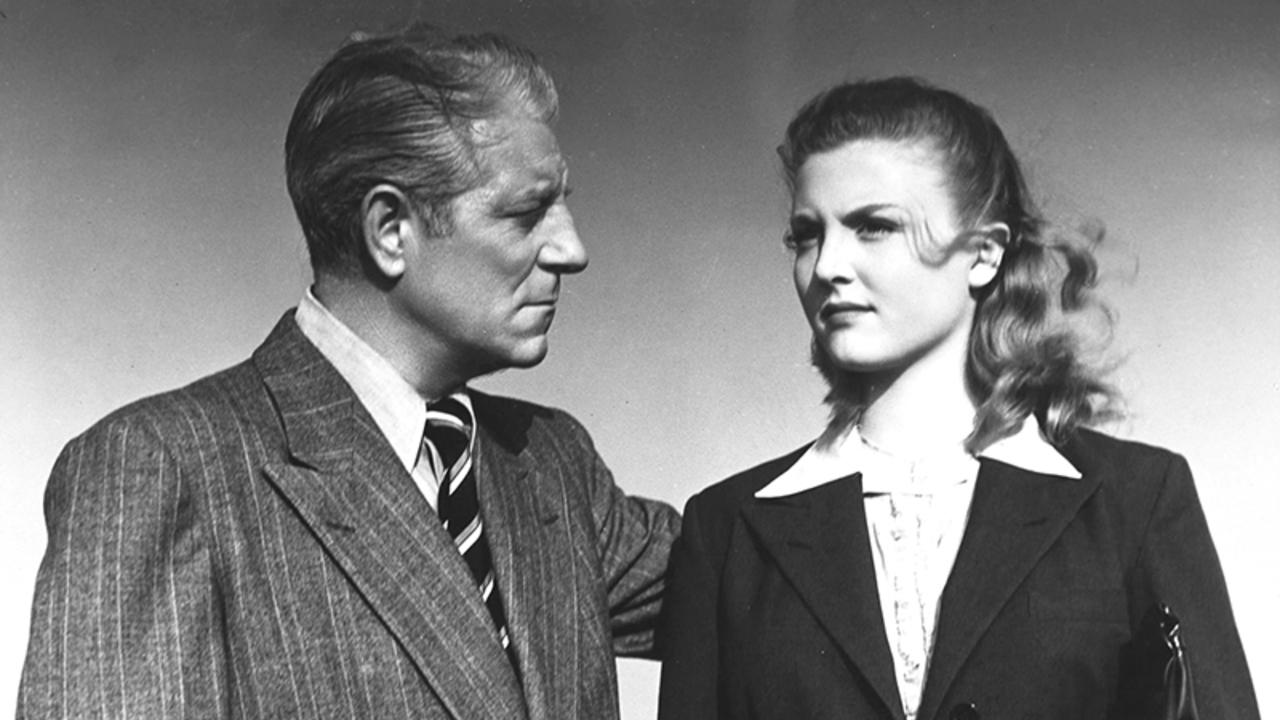
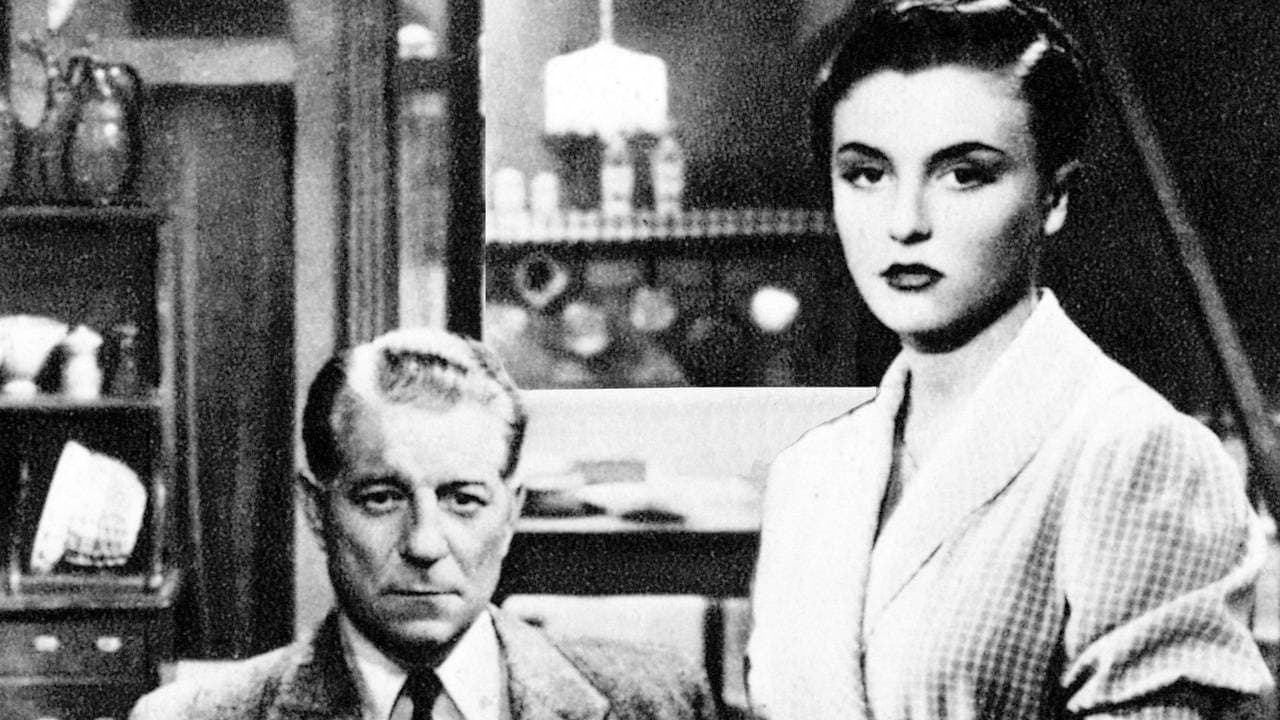
Come Live with Me (1941)... 1941


🎥 Check more movies by director Marcel Carné
⭐ Check more movies starring Jean Gabin
⭐ Check more movies starring Blanchette Brunoy
⭐ Check more movies starring Nicole Courcel
Marie of the Port (1950), the drama classic starring Jean Gabin and Blanchette Brunoy, was originally released in black and white — no official colour version was ever produced by the studio. What you are looking at is the professionally colorized restoration: every frame recoloured, available as an instant DRM-free HD (720p) download. You can judge it yourself — the colour preview plays on this page before you buy.
Discover Marie of the Port, the 1950 French crime drama film directed by Marcel Carné and starring Jean Gabin, Blanchette Brunoy, and Nicole Courcel, now available as a professionally colorized version. The screenplay was written by Georges Ribemont-Dessaignes and Jacques Prévert, based on the 1938 novel of the same title by Georges Simenon. The music score is by Joseph Kosma and the cinematography by Henri Alekan. It was made at the Saint-Maurice Studios in Paris and on location around Cherbourg in Normandy. The film marked a comeback for Carné after the poor reception of his previous film Gates of the Night in 1946 and several subsequent unsuccessful attempts to launch projects. Henri, owner of a busy brasserie and cinema in Cherbourg, takes the easy-going Odile who lives with him to the funeral of her father in Port-en-Bessin. The two are bored with each other. He waits for her in a café where he is taken with a new waitress called Marie, unaware that she is Odile’s tough little sister. He buys an old trawler in Port-en-Bessin, which he visits often to oversee its restoration and to pursue Marie. She has a young admirer called Marcel who gets drunk and is knocked down by Henri’s car. Henri takes the lad to his apartment in Cherbourg, where Odile can look after him. One day the provocative Marie turns up at Cherbourg, tantalising Henri but not giving in. Tired of trying to seduce her, he takes her to Marcel’s room, where they find Odile in bed with him. Disgusted with all three, Marie gets a bus home. A phone call from there about his boat warns Henri that Marie has been threatening to throw herself into the sea. He drives over in haste and she tells him she can in fact swim like a fish. As a last effort at winning her, he slips the keys to his business into her victorious hand. This crime drama combines the atmosphere of post-war France with a complex love triangle as a powerful businessman becomes obsessed with a younger woman who refuses to be possessed. Own this classic movie in color as a DRM-free MP4 digital download for just €15.00.
Henri, owner of a busy brasserie and cinema in Cherbourg, takes the easy-going Odile who lives with him to the funeral of her father in Port-en-Bessin. The two are bored with each other. He waits for her in a café where he is taken with a new waitress called Marie, unaware that she is Odile’s tough little sister. He buys an old trawler in Port-en-Bessin, which he visits often to oversee its restoration and to pursue Marie. She has a young admirer called Marcel who gets drunk and is knocked down by Henri’s car. Henri takes the lad to his apartment in Cherbourg, where Odile can look after him. One day the provocative Marie turns up at Cherbourg, tantalising Henri but not giving in. Tired of trying to seduce her, he takes her to Marcel’s room, where they find Odile in bed with him. Disgusted with all three, Marie gets a bus home. A phone call from there about his boat warns Henri that Marie has been threatening to throw herself into the sea. He drives over in haste and she tells him she can in fact swim like a fish. As a last effort at winning her, he slips the keys to his business into her victorious hand.
Henri Châtelard is the established king of his small domain in Cherbourg, owning a successful brasserie and cinema that give him wealth and local influence. Yet despite his power, he feels a sense of stagnation in his relationship with Odile, who shares his home but with whom he has grown bored. The trip to Port-en-Bessin for her father’s funeral is meant to be a routine obligation, but it becomes the catalyst for a life-changing obsession when Henri encounters Marie in the café.
Marie is Odile’s younger sister, but she is temperamentally the opposite of her easy-going sibling. She is described as “tough” and provocative, a young woman who does not yield easily to the desires of men. Henri’s immediate attraction to her is not merely physical; it represents his hunger for something vital and uncontrollable in a life that has become too predictable. His decision to buy the old trawler in Port-en-Bessin provides him with a pretext to return again and again to the port, ostensibly to oversee the boat’s restoration but in reality to pursue Marie.
The introduction of Marcel, Marie’s young admirer, adds another layer to the romantic entanglement. When Marcel gets drunk and is knocked down by Henri’s car, Henri’s decision to take him to his apartment in Cherbourg shows a mixture of guilt and calculation. Having Marcel in his home, cared for by Odile, allows Henri to keep the younger man close while continuing his pursuit of Marie. The domestic arrangement becomes increasingly complicated as Odile’s presence in the apartment, the wounded Marcel, and Henri’s obsession with Marie create a volatile emotional atmosphere.
Marie’s appearance in Cherbourg represents a turning point. Unlike Odile, who has settled into her life with Henri, Marie refuses to be seduced. Her tantalizing behavior—appearing to encourage Henri and then withdrawing—drives him to frustration and eventually to a desperate act. When he takes her to Marcel’s room, expecting to find it empty, and discovers Odile in bed with the young man, the scene exposes the messy reality of the relationships Henri has tried to control. Marie’s disgust at all three of them and her decision to return home by bus demonstrate that she has standards even if she is manipulative, and that the arrangement among Henri, Odile, and Marcel is too sordid for her taste.
The film’s ending, with the false alarm about Marie throwing herself into the sea, reveals her power over Henri. Her ability to make him rush to her side, combined with her final revelation that she can swim “like a fish,” shows that she has never truly been in danger—only Henri has been. The gesture of giving her the keys to his business is not just a surrender of his financial empire; it is the recognition that Marie has conquered him completely. The keys, symbolizing everything he has built in Cherbourg, become the price of a love that remains unconsummated but absolute.
Director: Marcel Carné
Stars: Jean Gabin, Blanchette Brunoy, Nicole Courcel, Claude Romain, Louis Seigner
Marie of the Port was originally filmed in black and white, with cinematography by Henri Alekan that captured the rugged beauty of the Normandy coast around Cherbourg and the intimate interiors of Henri’s brasserie and apartment. This professionally colorized restoration enhances every scene with frame-by-frame precision, from the gray waters of the English Channel to the warm lights of the brasserie and the colorful harbor life of Port-en-Bessin. The colorized version reveals new visual richness in the film’s settings, where the 1950s French coastal fashion, the period automobiles, the restored trawler, and the contrast between the urban brasserie in Cherbourg and the rustic café in the port gain authenticity that transports viewers to post-war Normandy. Jean Gabin’s performance as Henri Châtelard gains additional dimension in color, his portrayal of the powerful, possessive businessman becoming more vivid and complex. Nicole Courcel’s luminous performance as Marie benefits from colorization that highlights the character’s provocative beauty and the mystery of her true feelings. Blanchette Brunoy’s Odile, the patient woman left behind by Henri’s obsession, becomes more poignant in color, and the supporting cast, including Claude Romain as Marcel and Louis Seigner as the uncle, contribute to the richly drawn social world. The film’s score by Joseph Kosma, combined with the visual enhancement, creates a more immersive experience of Marcel Carné’s return to form. Now also available in colour.
Buy Marie of the Port in color today for just €15.00. Your DRM-free MP4 download is available for instant access.
Released in 1950, Marie of the Port (original French title “La Marie du port”) holds an important place in the history of French cinema as the film that marked Marcel Carné’s comeback after the difficult period following his 1946 film Gates of the Night. Carné, one of the most celebrated directors of the Poetic Realism movement, had struggled to find projects after the critical and commercial failure of that film. Marie of the Port’s success re-established him as a major force in French cinema and demonstrated that his talent for visual poetry and psychological drama remained undiminished.
The film’s source material, a 1938 novel by Georges Simenon, provided Carné with a rich foundation for exploring themes of desire, possession, and the clash between established power and youthful independence. Simenon’s works were frequently adapted by French filmmakers, and his terse, psychologically acute storytelling complemented Carné’s atmospheric direction. The screenplay by Georges Ribemont-Dessaignes and Jacques Prévert, one of the great screenwriters of French cinema, brought literary sophistication to the adaptation while maintaining the raw emotional tension of Simenon’s original.
The collaboration of Joseph Kosma on the music and Henri Alekan on cinematography contributed to the film’s artistic stature. Kosma, known for his work with Carné on earlier masterpieces, provided a score that enhanced the film’s emotional landscape. Alekan, a master cinematographer whose career would later include the legendary work on Jean Cocteau’s Beauty and the Beast (1946), brought visual poetry to the Normandy locations and studio interiors. The combination of location shooting around Cherbourg and studio work at Saint-Maurice Studios gave the film both authenticity and stylized beauty.
Jean Gabin’s performance in Marie of the Port is historically significant because it represented a decisive shift in his star persona. After the war, Gabin was transitioning from the doomed working-class figures of pre-war Poetic Realism to a more mature, assured, and powerful type. The film’s reception marked this transformation as a major development in French cinema. Henri Châtelard, with his wealth, confidence, and controlling nature, became the model for many of the characters Gabin would play in the 1950s and 1960s. The film showed that Gabin could embody authority and complexity rather than simply the tragic victim of fate.
Nicole Courcel, cast as Marie, became a prominent young actress in French cinema, and the role of the provocative, elusive young woman helped establish her screen persona. Blanchette Brunoy, as Odile, provided a subtle counterbalance to the more flamboyant characters of Henri and Marie. The presence of veteran actors like Louis Seigner and René Blancard anchored the film in the traditions of French cinema while allowing the younger performers to shine.
The film’s exploration of post-war French society, with its restless characters trying to find meaning in a changed world, resonated with audiences still recovering from the disruptions of World War II. The Norman port setting, the trawler restoration, and the brasserie business reflected a France rebuilding itself economically and emotionally. Through modern colorization, this important work of post-war French cinema reaches new audiences who can appreciate Jean Gabin’s transformed star image, Marcel Carné’s direction, and the film’s place in the history of French crime drama. Now also available en couleur.
Q: Who stars in Marie of the Port?
A: Jean Gabin stars as Henri Châtelard, with Blanchette Brunoy as Odile and Nicole Courcel as Marie.
Q: Who directed Marie of the Port?
A: Marcel Carné directed this adaptation of the Georges Simenon novel, with a screenplay by Georges Ribemont-Dessaignes and Jacques Prévert.
Q: What is the plot of Marie of the Port?
A: A wealthy Cherbourg businessman becomes obsessed with the younger sister of his lover, buying a trawler to pursue her, only to find himself surrendering everything to win her.
Q: What format is the download?
A: The film is delivered as MP4 and MKV files that play on virtually any device.
Q: Is there DRM on the file?
A: No. The download is completely DRM-free so you can watch it on any device without restrictions.
Q: How quickly can I watch after purchase?
A: Your download link is available instantly after payment, so you can start watching within minutes.