The Gay Deception (1935) Colorized 1935


🎥 Check more movies by director Martin Ritt
⭐ Check more movies starring Joanne Woodward
⭐ Check more movies starring Sheree North
⭐ Check more movies starring Tony Randall
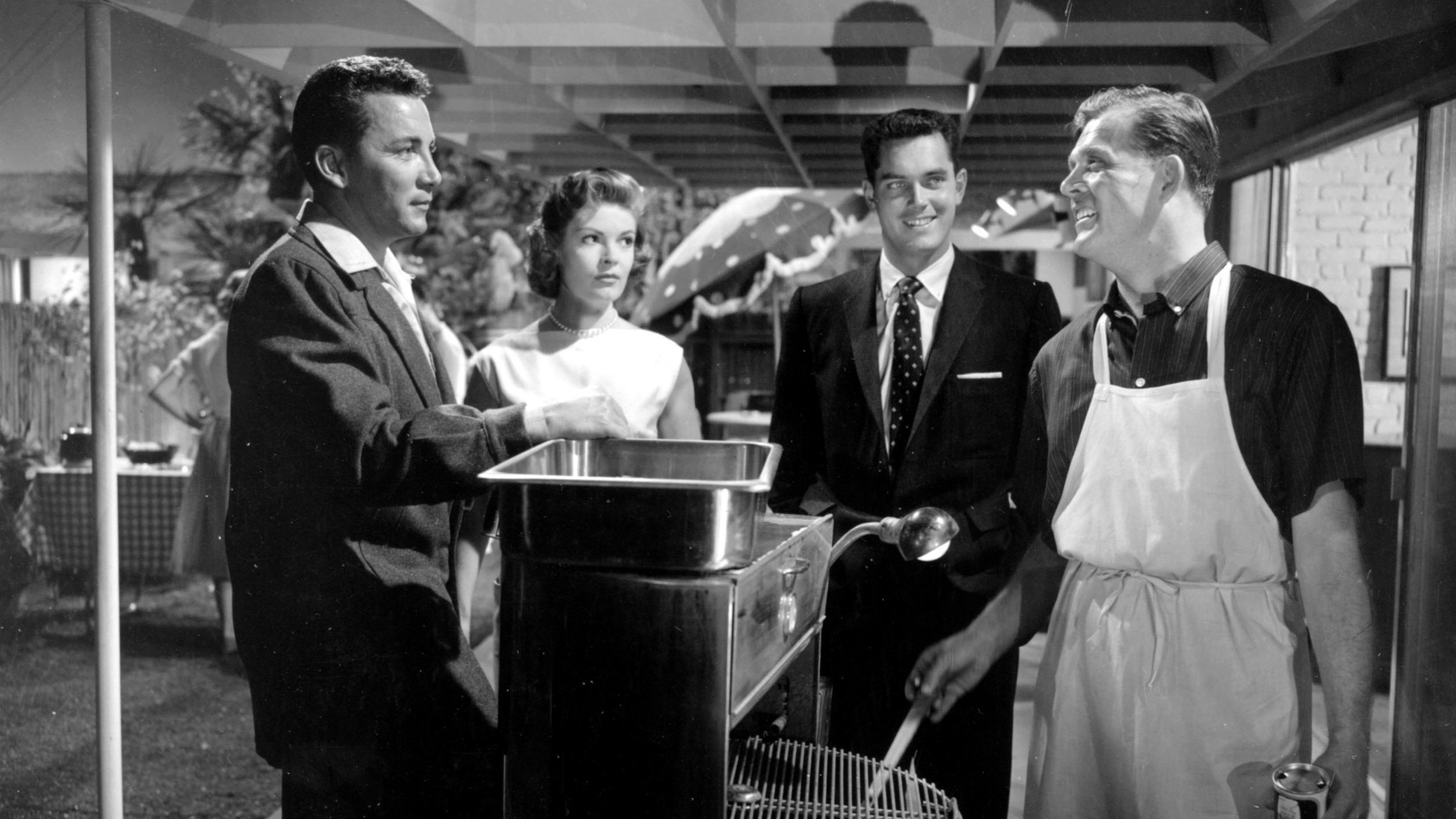
No Down Payment (1957), the drama classic starring Joanne Woodward and Sheree North, was originally released in black and white — no official colour version was ever produced by the studio. What you are looking at is the professionally colorized restoration: every frame recoloured, available as an instant DRM-free HD (720p) download. You can judge it yourself — the colour preview plays on this page before you buy.
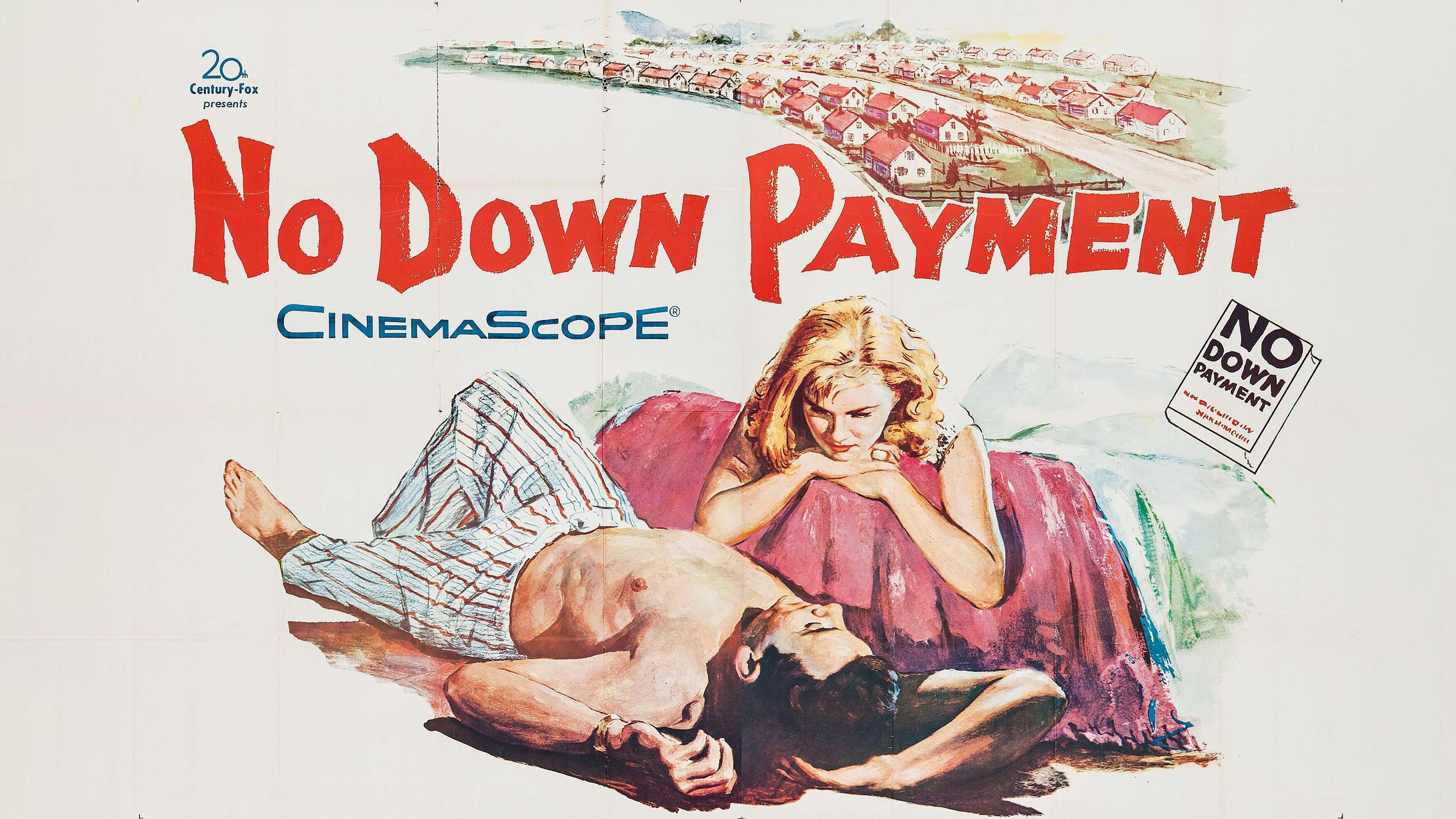
Discover No Down Payment, the 1957 American drama film directed by Martin Ritt and starring Joanne Woodward, Sheree North, Tony Randall, Jeffrey Hunter, Cameron Mitchell, Patricia Owens, Barbara Rush, and Pat Hingle, now available as a professionally colorized version. Based on the novel of the same name by John McPartland, the film was written by Philip Yordan, who fronted for an uncredited and blacklisted Ben Maddow. Set in a California subdivision, the story follows four neighbor couples facing problems such as alcoholism, racism and promiscuity. New to the city’s Sunrise Hills subdivision, electrical engineer David Martin and wife Jean are welcomed by their neighbors. They include appliance store manager Herman Kreitzer, auto mechanic Troy Boone and car salesman Jerry Flagg, and their respective wives. Leola, the unhappy and restless wife of Troy, wants to have a child. A veteran who still clings to his achievements during the war, Troy has applied for the position of police chief. He refuses to discuss children until the job is his. Frequently drunk Jerry awkwardly makes passes at the other men’s wives, humiliating his own spouse, Isabelle. He also is heavily in debt, spending far too much on things he cannot afford, and often comes up with ‘make it big’ ideas. He pressures a family to buy a car beyond their means, endangering his job. David also has money problems. Jean strongly urges him to go into sales, a more lucrative field. But he is a skilled engineer who prefers to stick with what he knows best. This drama combines social realism with suburban melodrama as neighbor couples confront the dark underbelly of post-war American prosperity. Own this classic movie in color as a DRM-free MP4 digital download for just €15.00.
New to the city’s Sunrise Hills subdivision, electrical engineer David Martin and wife Jean are welcomed by their neighbors. They include appliance store manager Herman Kreitzer, auto mechanic Troy Boone and car salesman Jerry Flagg, and their respective wives. Leola, the unhappy and restless wife of Troy, wants to have a child. A veteran who still clings to his achievements during the war, Troy has applied for the position of police chief. He refuses to discuss children until the job is his.
Frequently drunk Jerry awkwardly makes passes at the other men’s wives, humiliating his own spouse, Isabelle. He also is heavily in debt, spending far too much on things he cannot afford, and often comes up with ‘make it big’ ideas. He pressures a family to buy a car beyond their means, endangering his job.
David also has money problems. Jean strongly urges him to go into sales, a more lucrative field. But he is a skilled engineer who prefers to stick with what he knows best.
Herman has a valued employee, Iko, who wants to move into Sunrise Hills with his wife and live the suburban life like anybody else. But the racial bias of the time is obvious and Herman’s wife dislikes the idea of risking the wrath of neighbors by giving Iko a reference. Also the city council’s president, Herman must inform Troy that he cannot be police chief due to his lack of education. The volatile Troy gets drunk and sexually assaults David’s wife Jean, then beats up David when confronted by the angry husband. During an altercation with Leola, after which she decides to leave, Troy is accidentally pinned under his car, and by the time it is lifted from him, he is dying in his wife’s arms. Leola drives out of town as the others reassess their lives.
The Sunrise Hills subdivision represents the post-war American suburban dream—new homes, modern appliances, and the promise of upward mobility for returning veterans and their families. But beneath the polished surface of identical houses and manicured lawns, the residents struggle with personal demons, financial pressures, and the unresolved tensions of a rapidly changing society. The film uses the close proximity of suburban living to explore how the American dream’s promise of prosperity and community masks deeper problems of alcoholism, racism, sexual frustration, and economic insecurity.
David Martin, the electrical engineer, embodies the conflict between professional integrity and economic pressure. His wife Jean’s desire for a more affluent lifestyle pushes him toward sales, a field where he would be more financially rewarded but less fulfilled. This tension reflects the broader post-war anxiety about the middle-class’s reliance on consumption and the compromises people made to maintain suburban appearances.
Troy Boone represents the darker side of the veteran experience. Having distinguished himself in combat, he returns home only to find that his wartime achievements do not translate into civilian success. His frustration with his lack of education and his inability to become police chief fuels his volatile temper and his inability to give his wife Leola the child she desperately wants. His drinking, sexual assault of Jean, and ultimate death under his car represent the tragic consequences of a man unable to adapt to the new social order.
Jerry Flagg, the alcoholic car salesman, represents the most visible failure of the suburban dream. His constant debt, false schemes, and humiliating behavior toward his wife Isabelle expose the hollowness of a lifestyle built on easy credit and false promises. His pressure on a family to buy a car they cannot afford shows how the consumer economy preys on vulnerable people, while his own life spirals out of control.
The subplot involving Iko, Herman’s employee, and the racial discrimination he faces in trying to move into Sunrise Hills provides the film’s most direct social commentary. Herman’s wife’s reluctance to give Iko a reference out of fear of neighbor disapproval reveals the systemic racism embedded in supposedly respectable suburban communities. Herman’s position as city council president forces him to confront the contradiction between his personal decency and the prejudices of the society he represents.
The film’s climax, with Troy’s death and Leola’s departure, leaves the surviving couples to reassess their lives and values. The suburban dream, the film suggests, requires more than just a no down payment mortgage—it demands honest self-reflection, genuine community, and the courage to confront the social problems that prosperity too often hides. Leola’s decision to leave rather than remain in the subdivision represents a rejection of the false promises that have defined her marriage and her life in Sunrise Hills.
Director: Martin Ritt
Stars: Joanne Woodward, Sheree North, Tony Randall, Jeffrey Hunter, Cameron Mitchell, Patricia Owens, Barbara Rush, Pat Hingle
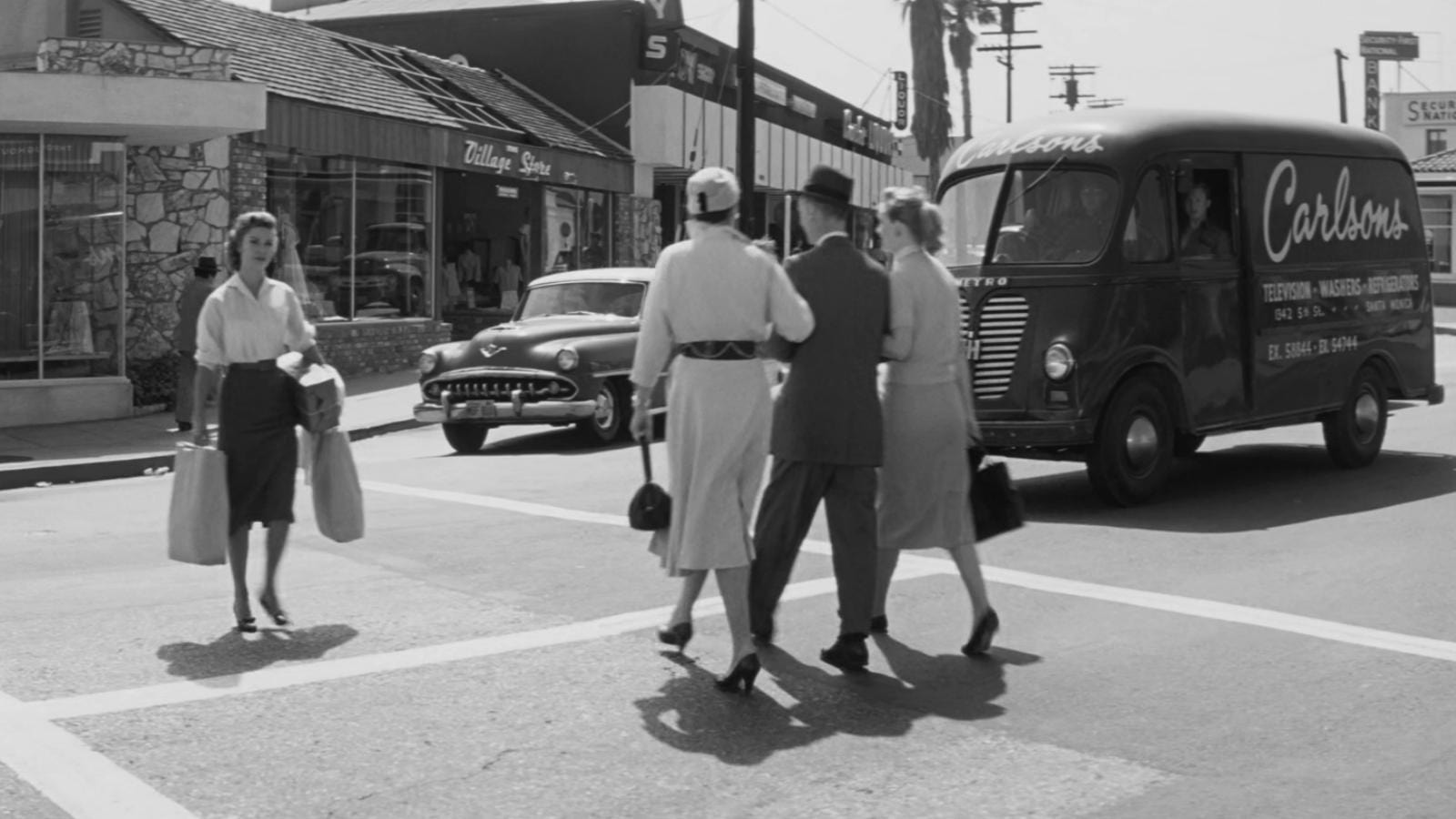
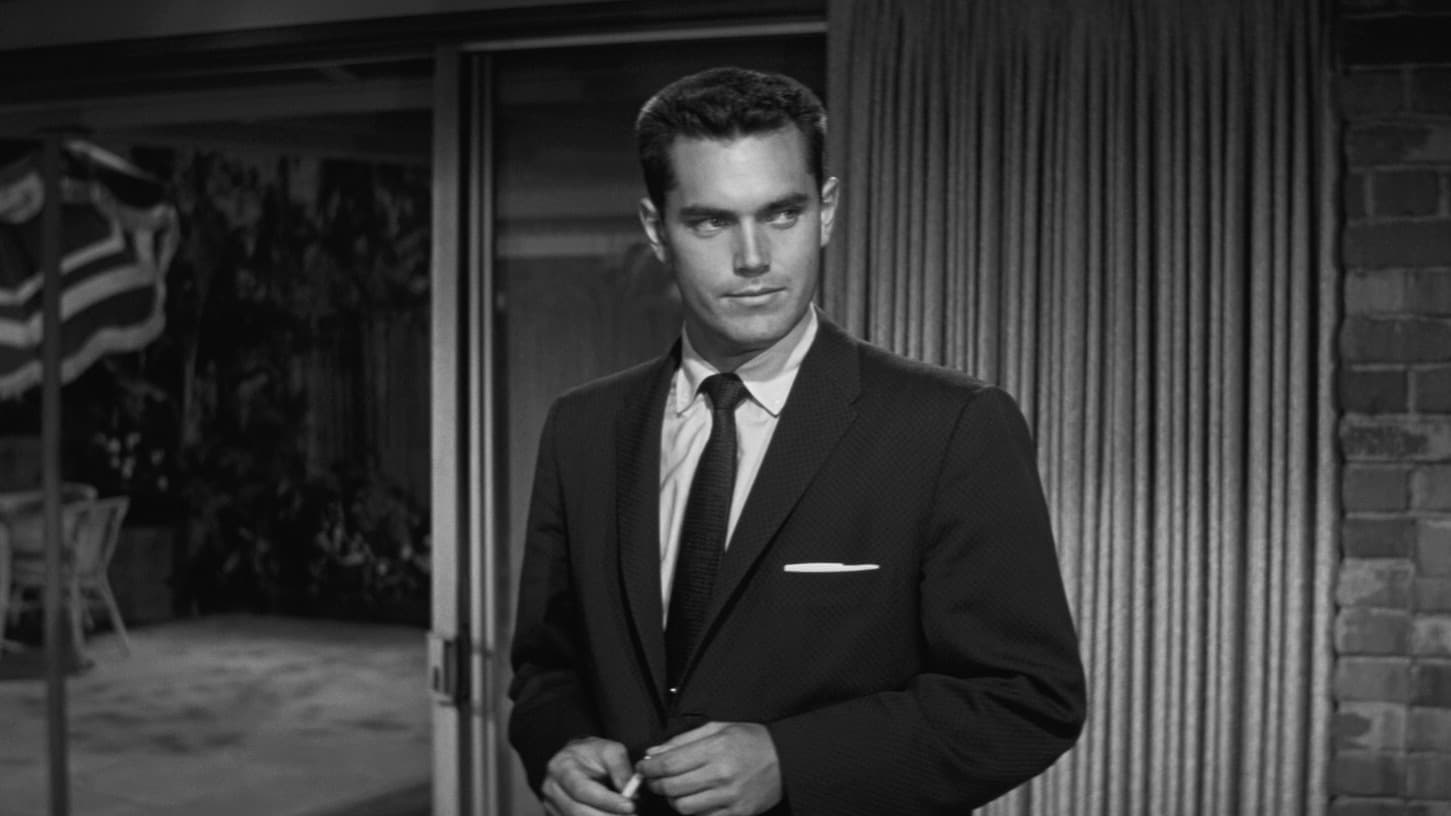
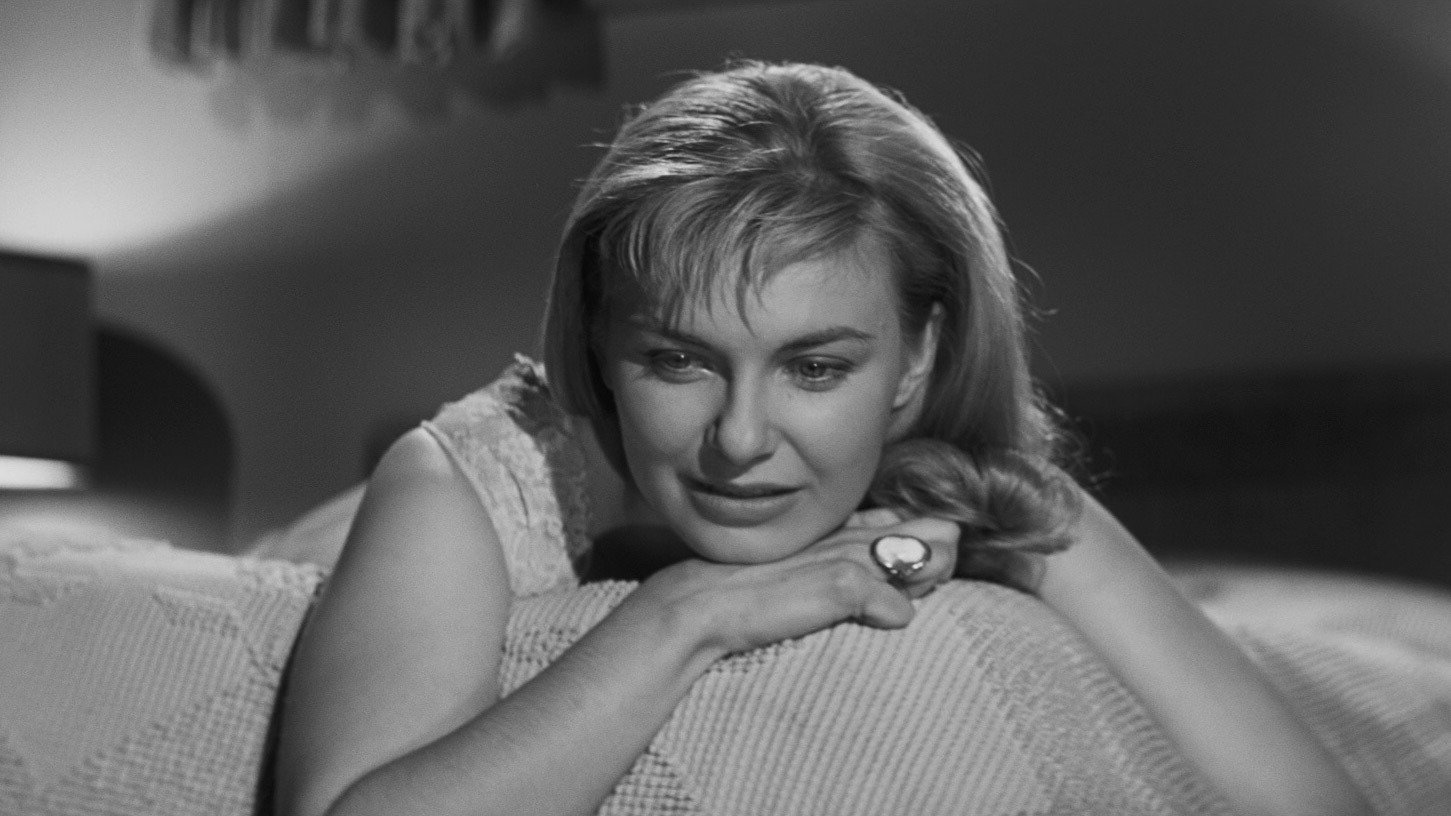
No Down Payment was originally filmed in black and white, with cinematography that captured the stark, uniform landscape of the post-war American suburban subdivision and the claustrophobic intimacy of neighboring houses. This professionally colorized restoration enhances every scene with frame-by-frame precision, from the identical tract houses of Sunrise Hills to the period-accurate interiors and automobiles that defined 1950s suburban life. The colorized version reveals new visual richness in the film’s settings, where the era’s fashion, home decor, and consumer products gain authenticity that transports viewers to the heart of post-war American suburbia. Joanne Woodward’s nuanced performance as Jean Martin gains additional dimension in color, her portrayal of a wife struggling with her husband’s career choices and the moral compromises of suburban life becoming even more compelling. Tony Randall’s against-type dramatic turn as the alcoholic Jerry Flagg benefits from colorization that highlights the desperation beneath his character’s bluster. Cameron Mitchell’s volatile Troy Boone, Sheree North’s restless Leola, and the rest of the ensemble cast bring the suburban tragedy to life with the added visual depth that colorization provides. The film’s social themes and character dynamics become more immediate and accessible to modern audiences through the restored visual clarity. Now also available in colour.
Buy No Down Payment in color today for just €15.00. Your DRM-free MP4 download is available for instant access.
Released in 1957, No Down Payment represents a significant example of Hollywood’s engagement with the social problems of post-war American suburban life. Directed by Martin Ritt, a director known for his socially conscious films and his willingness to address controversial subjects, the film pulls back the curtain on the dark underbelly of the suburban dream. The film’s screenplay, officially credited to Philip Yordan but actually written by the blacklisted Ben Maddow, reflects the tensions of the McCarthy era and the ways in which political persecution affected the film industry. Yordan, who had a history of fronting for blacklisted writers, allowed Maddow’s work to reach the screen while the latter’s name was kept from the credits.
The film was based on a novel by John McPartland, which itself was developed from an idea by Philip Yordan. Yordan was inspired by a Life magazine article about the construction of new subdivisions characterized by “no alleys, no separation, no neighborhood, no community.” This observation about the alienation of suburban living became the foundation for a story that explored how physical proximity without genuine community could breed loneliness, resentment, and destructive behavior. McPartland was paid $7,500 to write the novel based on Yordan’s story, with Yordan keeping the film rights. The arrangement, which earned McPartland an estimated $35,000 from book sales, demonstrates the complex business relationships behind mid-century Hollywood adaptations.
The film’s production history also reveals tensions between the studio and the filmmakers. Director Martin Ritt, who was himself a victim of the Hollywood blacklist before being able to work again, reportedly disliked the script’s emphasis on sex and preferred to focus on the economic aspects of the story. This resulted in a final film that is more social drama than the sex picture Yordan had originally written. Fox head Spyros Skouras reportedly felt the finished film was “a leftist picture” and did not give it the promotional support it deserved, limiting its commercial impact despite positive critical reception.
Despite these challenges, No Down Payment earned two BAFTA nominations, for Best Film From Any Source and Best Foreign Actress (Joanne Woodward), indicating the film’s international critical recognition. The film has gained cult status over the years as a prescient examination of suburban alienation and consumer culture. It even caught the attention of David Bowie, who mentioned the film in his first fan letter from America in 1967, describing it as “a great film, but rather depressing if it is a true reflection of The American Way Of Life.”
The film’s impact extends beyond cinema to become a document of 1950s American anxieties. Its exploration of alcoholism, racism, materialism, and marital dissatisfaction in the supposedly idyllic suburbs anticipates later works like Revolutionary Road and Mad Men. The film’s title, “No Down Payment,” refers to the easy credit that made suburban homeownership possible for millions of Americans, but it also symbolizes the moral and emotional emptiness that could accompany such acquisitions. Through modern colorization, this social drama reaches new audiences who can appreciate its prescient critique of suburban life, its stellar ensemble cast, and its place in the history of American cinema. Now also available en couleur.
Q: Who stars in No Down Payment?
A: Joanne Woodward, Sheree North, Tony Randall, Jeffrey Hunter, Cameron Mitchell, Patricia Owens, Barbara Rush, and Pat Hingle star in this suburban drama.
Q: What is No Down Payment about?
A: The film follows four couples in a California suburban subdivision dealing with alcoholism, racism, promiscuity, and financial pressure in 1950s America.
Q: Who directed No Down Payment?
A: Martin Ritt directed the film, with a screenplay written by Ben Maddow (uncredited, blacklisted) and officially credited to Philip Yordan.
Q: What format is the download?
A: The film is delivered as MP4 and MKV files that play on virtually any device.
Q: Is there DRM on the file?
A: No. The download is completely DRM-free so you can watch it on any device without restrictions.
Q: How quickly can I watch after purchase?
A: Your download link is available instantly after payment, so you can start watching within minutes.