Blind Date (1959) Colorized 1959


🎥 Check more movies by director Leslie Arliss
⭐ Check more movies starring Margaret Lockwood
⭐ Check more movies starring Stewart Granger
⭐ Check more movies starring Patricia Roc
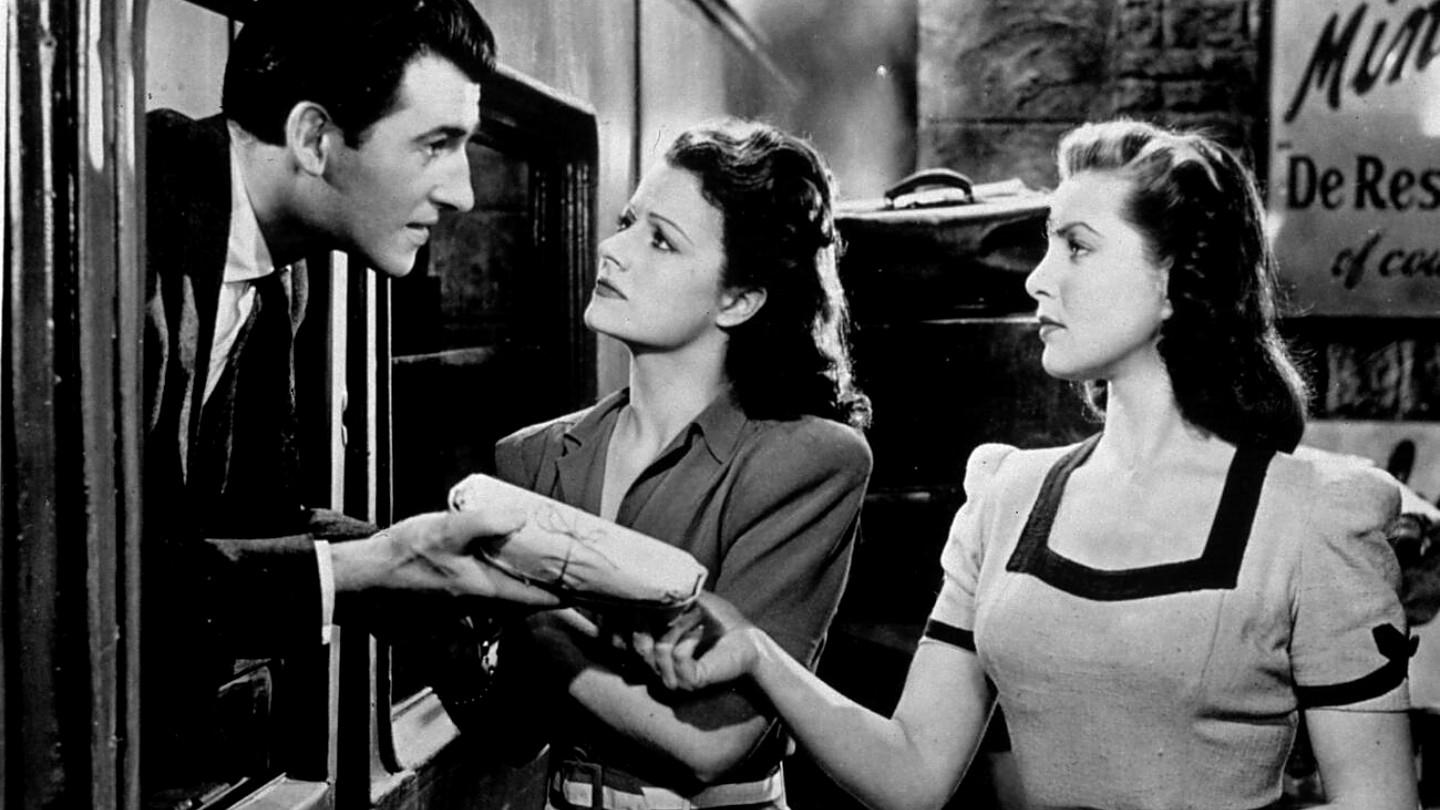
Love Story (1944), the drama classic starring Margaret Lockwood and Stewart Granger, was originally released in black and white — no official colour version was ever produced by the studio. What you are looking at is the professionally colorized restoration: every frame recoloured, available as an instant DRM-free HD (720p) download. You can judge it yourself — the colour preview plays on this page before you buy.
Discover Love Story, the 1944 British romance film directed by Leslie Arliss and starring Margaret Lockwood, Stewart Granger, and Patricia Roc, now available as a professionally colorized version. Based on a short story by J. W. Drawbell, the film is about a concert pianist who, after learning that she is dying of heart failure, decides to spend her last days in Cornwall. While there, she meets a former RAF pilot who is going blind, and soon a romantic attraction forms. Concert pianist Felicity Crichton Lissa Campbell leaves her successful music career to devote herself to the British war effort. She applies to be in the Women’s Auxiliary Air Force, part of the RAF, but is rejected for health reasons. She then learns that she has a heart condition and does not have long to live. Determined to live her final months fully, she goes to a resort in Cornwall. Not wanting to be recognised, she introduces herself as Lissa. She is soon befriended by Tom Tanner, a salty old Yorkshireman, on government assignment to investigate mines. She meets Kit Firth, a brash young engineer, and they form an association. She does not know Kit will soon be blind due to a war injury. This wartime melodrama produced by Gainsborough Pictures combines romantic tragedy with themes of sacrifice and resilience as two people facing their own mortality find love in the most unlikely circumstances. Own this classic movie in color as a DRM-free MP4 digital download for just €15.00.
Concert pianist Felicity Crichton Lissa Campbell leaves her successful music career to devote herself to the British war effort. She applies to be in the Women’s Auxiliary Air Force, part of the RAF, but is rejected for health reasons. She then learns that she has a heart condition and does not have long to live. Determined to live her final months fully, she goes to a resort in Cornwall. Not wanting to be recognised, she introduces herself as Lissa. She is soon befriended by Tom Tanner, a salty old Yorkshireman, on government assignment to investigate mines. He sees her sadness, but does not pry.
She meets Kit Firth, a brash young engineer, and they form an association. She does not know Kit will soon be blind due to a war injury. The only one who knows is Judy, his childhood friend who is secretly in love with him. Meanwhile, Tom arranges for a piano to be provided for Lissa and she begins composing, music later to become famous as the Cornish Rhapsody, inspired by her new environment and by Kit. Later, Kit introduces Lissa to Judy, who is working on an open-air play. Judy persuades Tom to invest in her production of The Tempest.
Kit and Lissa’s romance grows but, whenever things become serious, Kit backs away. Lissa grows increasingly frustrated, especially after he refuses Tom’s offer to supervise the reopening of a mine in which Kit has found much-needed molybdenum, and she finally breaks up with him. Kit confesses to Judy that he has never met anyone as understanding as Lissa. The next day a mining accident traps Tom and his crew. When Kit descends the mine, he too becomes trapped but is able to escape and rescue them, proving he is not a coward. When Lissa finds him practising reading Braille, everything falls into place. She urges him to have surgery, but he says the doctors estimated his chances of surviving it were 100 to one, and that Judy had talked him out of it.
Lissa gets Judy to admit she views blindness as a godsend; Kit would have to turn to her. They agree Lissa will leave him if Judy persuades Kit to have the operation. After Kit leaves for surgery, Judy and her company prepare for their play. For the premiere, Judy is unable to go on until she hears the results of the imminent surgery. Lissa placates the audience for the delay by performing her new composition inspired by Kit. During her performance, she is overwhelmed by the same fear, and faints. When Lissa recovers, she is reassured that Kit is well. When Judy thanks her for giving up Kit, Lissa admits that she is not giving up much—because she is dying. True to her word, she says goodbye to Kit, saying she will be going on a world tour and may not see him again. Despite his profession of love, Lissa leaves, heartbroken.
In the coming weeks she travels the world, entertaining the troops. Meanwhile, Kit proposes to Judy and she accepts, but their relationship lacks passion. Despite Tom’s advice to her to accept the truth and not cheat another woman out of the love she deserves, Judy insists she will not give up Kit. Sometime later, Lissa is performing at the Royal Albert Hall. After her final number, she spots Kit in the wings in his RAF uniform, and runs into his arms before fainting. When she recovers, she sees Judy. Recognising that he will always love Lissa, Judy announces, to Kit’s surprise, that they will not be getting married and leaves abruptly—Kit never belonged to her. Lissa finally reveals she only has months to live. Kit tells her they must take what happiness they can.
Lissa Campbell’s journey from accomplished concert pianist to a woman facing her own mortality represents the wartime reality that death could come to anyone, regardless of talent or success. Her decision to spend her final months in Cornwall, away from the expectations of her former life, reflects a desire for authenticity in the face of death. The choice to hide her identity as “Lissa” allows her to experience human connections free from the preconceptions that come with her reputation as a celebrated musician.
The relationship that develops between Lissa and Kit Firth is built on a foundation of mutual hidden struggles—both are facing the end of their current identities, though neither knows the other’s secret initially. Kit’s impending blindness from war injuries represents the physical and psychological toll of combat, while Lissa’s heart condition represents the fragility of life even for those far from the front lines. Their connection forms precisely because they can sense each other’s pain without knowing its specific cause.
Judy’s role as Kit’s childhood friend who is secretly in love with him adds complexity to the romantic triangle. Her manipulation of Kit’s medical decisions—convincing him not to have the surgery that might restore his sight—represents a selfish desire to keep him dependent on her. This contrasts with Lissa’s selfless encouragement for Kit to have the operation, even though it means she might lose him. The film presents a clear moral contrast between Judy’s possessive love and Lissa’s sacrificial love.
The mining accident sequence serves as a crucial test of character, proving Kit’s courage and capability despite his fears about going blind. His rescue of Tom and his crew demonstrates that his worth is not diminished by his physical limitations. This moment of heroism brings Lissa and Kit closer together, as she recognizes the man beneath his bravado.
The film’s climax at the Royal Albert Hall brings together the musical and romantic threads of the story. Lissa’s performance of her composition inspired by Kit represents the creative expression of her love for him. Her collapse after seeing Kit in his RAF uniform underscores the physical toll her condition has taken. Judy’s recognition that Kit will never truly love her represents a moment of moral clarity—she finally accepts that love cannot be forced or manipulated.
The film’s ending, with Kit and Lissa accepting that they must take whatever happiness they can find together despite their limited time, reflects the wartime context in which it was made. The message of seizing love and happiness in the face of mortality resonated deeply with audiences living through World War II, who understood better than most the preciousness of time and the importance of love in dark times.
Director: Leslie Arliss
Stars: Margaret Lockwood, Stewart Granger, Patricia Roc, Tom Walls, Reginald Purdell, Walter Hudd
Love Story was originally filmed in black and white, with cinematography that captured the dramatic beauty of Cornwall’s coastline and the elegant interiors of the Royal Albert Hall. This professionally colorized restoration enhances every scene with frame-by-frame precision, from the rugged cliffs of Porthcurno where the Minack Theatre provided a stunning backdrop to the grand concert hall where Lissa performs her final composition. The colorized version reveals new visual richness in the film’s settings, where the period-accurate 1940s British wartime clothing, Cornwall’s natural beauty, and the contrast between the rugged mining community and refined concert venues gain authenticity that transports viewers to wartime Britain. Margaret Lockwood’s luminous performance as Lissa Campbell gains additional dimension in color, her portrayal of the dying pianist conveying both the fragility of her condition and the strength of her spirit. Stewart Granger’s charismatic Kit Firth benefits from colorization that highlights the complexity of his character—the brash exterior hiding fear and vulnerability. Patricia Roc’s Judy represents the film’s moral complexity, her character’s manipulative nature and eventual redemption becoming more apparent through visual enhancement. Tom Walls’ memorable performance as Tom Tanner, the salty Yorkshireman who becomes a father figure to Lissa, shines with new warmth in color. Now also available in colour.
Buy Love Story in color today for just €15.00. Your DRM-free MP4 download is available for instant access.
Released in 1944, Love Story represents the peak of Gainsborough Pictures’ wartime melodramas, a genre that provided British audiences with romantic escapism during the darkest years of World War II. Directed by Leslie Arliss, who had gained recognition for his work on The Wicked Lady (1945), Love Story exemplifies the studio’s ability to blend romance, melodrama, and wartime themes into commercially successful films that resonated with home-front audiences. The film was one of the biggest British hits of 1944, making more money than any other film in Britain in November of that year.
The film’s production took advantage of remarkable locations, including the Minack Theatre in Porthcurno, Cornwall—an open-air theatre carved into the cliffs overlooking the Atlantic Ocean. This location provided an authentic and visually stunning backdrop for key scenes, demonstrating wartime filmmakers’ ingenuity in finding suitable locations despite the challenges of travel and resource limitations. The final concert scenes were filmed at London’s prestigious Royal Albert Hall, adding cultural authenticity to Lissa’s musical career.
Margaret Lockwood, already a major star from her role in The Lady Vanishes (1938), undertook significant preparation for her role as a concert pianist. She had not played piano since school but learned to play the concerto for realism in her performance, practicing for hours every day with Harriet Cohen, who performed on the soundtrack. Lockwood’s dedication to authenticity, even in the midst of wartime production challenges, speaks to the commitment of British actors of the era to their craft.
The film’s musical element—Lissa’s composition that becomes famous as the Cornish Rhapsody—adds a layer of cultural significance to the story. While the actual Cornish Rhapsody was composed later, the film’s fictional version of its creation reflects the real importance of music in British cultural life during the war. Concerts and musical performances provided both entertainment and morale-boosting for wartime audiences, making Lissa’s musical journey particularly resonant for contemporary viewers.
Released in the United States as “A Lady Surrenders,” the film found international success despite being very much a product of its specific British wartime context. The story of two people facing mortality and finding love spoke to universal human experiences, transcending national boundaries. The film’s critical reception has evolved over time—while some contemporary critics found it overly melodramatic, modern viewers appreciate it as a product of its era, a “shot in the arm” for wartime audiences seeking both romantic escapism and emotional catharsis. Through modern colorization, this wartime romance reaches new audiences who can appreciate Margaret Lockwood and Stewart Granger’s performances, its Cornwall setting, and its place in the history of British cinema during World War II. Now also available en couleur.
Q: Who stars in Love Story (1944)?
A: Margaret Lockwood, Stewart Granger, and Patricia Roc star, with Tom Walls in a memorable supporting role as Tom Tanner.
Q: Is Love Story (1944) related to the 1970 American film?
A: No, this is a British wartime romance film completely unrelated to the 1970 American film Love Story starring Ali MacGraw and Ryan O’Neal.
Q: What is the plot of Love Story (1944)?
A: A dying concert pianist goes to Cornwall for her final months, falls in love with a former RAF pilot going blind, and they must navigate love, sacrifice, and mortality.
Q: What format is the download?
A: The film is delivered as MP4 and MKV files that play on virtually any device.
Q: Is there DRM on the file?
A: No. The download is completely DRM-free so you can watch it on any device without restrictions.
Q: How quickly can I watch after purchase?
A: Your download link is available instantly after payment, so you can start watching within minutes.