His Butler’s Sister (1943) Colorized 1943


 ⭐ 8.2
⭐ 8.2 


🎥 Check more movies by director Robert Hamer
⭐ Check more movies starring Eric Portman
⭐ Check more movies starring Guy Rolfe
⭐ Check more movies starring Nadia Gray
The Spider and the Fly (1949), the crime classic starring Eric Portman and Guy Rolfe, was originally released in black and white — no official colour version was ever produced by the studio. What you are looking at is the professionally colorized restoration: every frame recoloured, available as an instant DRM-free HD (720p) download. You can judge it yourself — the colour preview plays on this page before you buy.
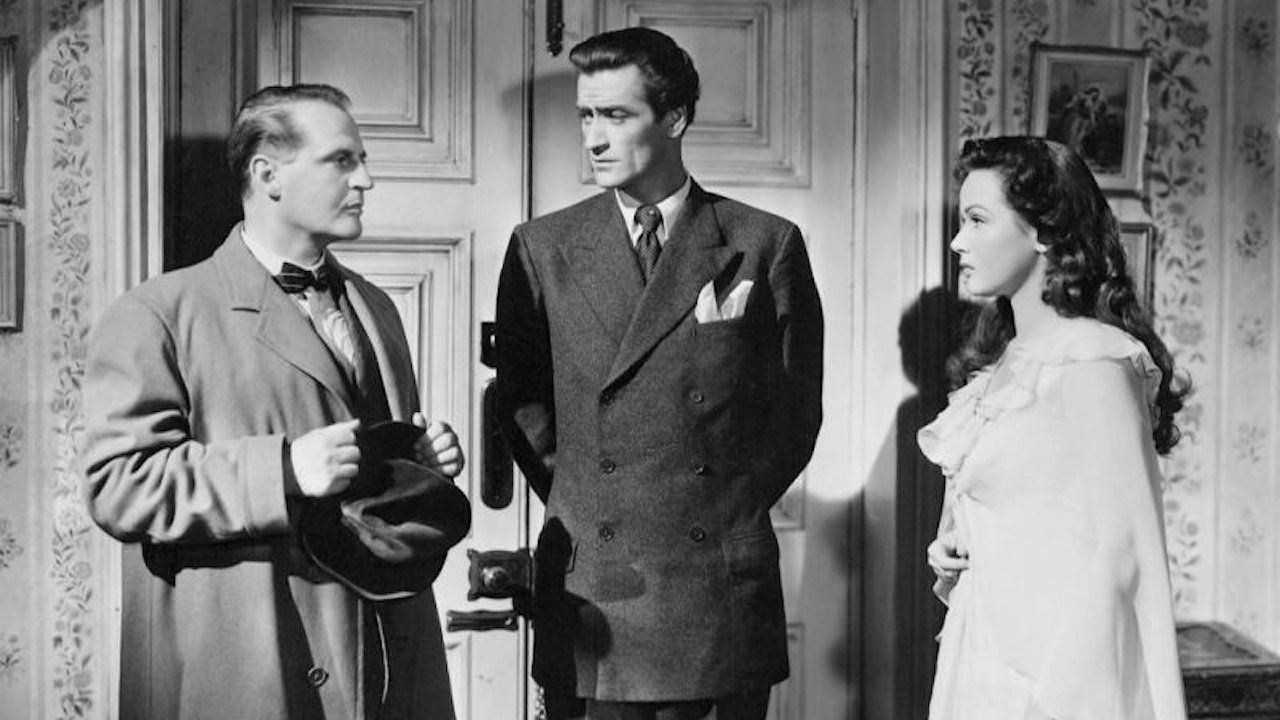
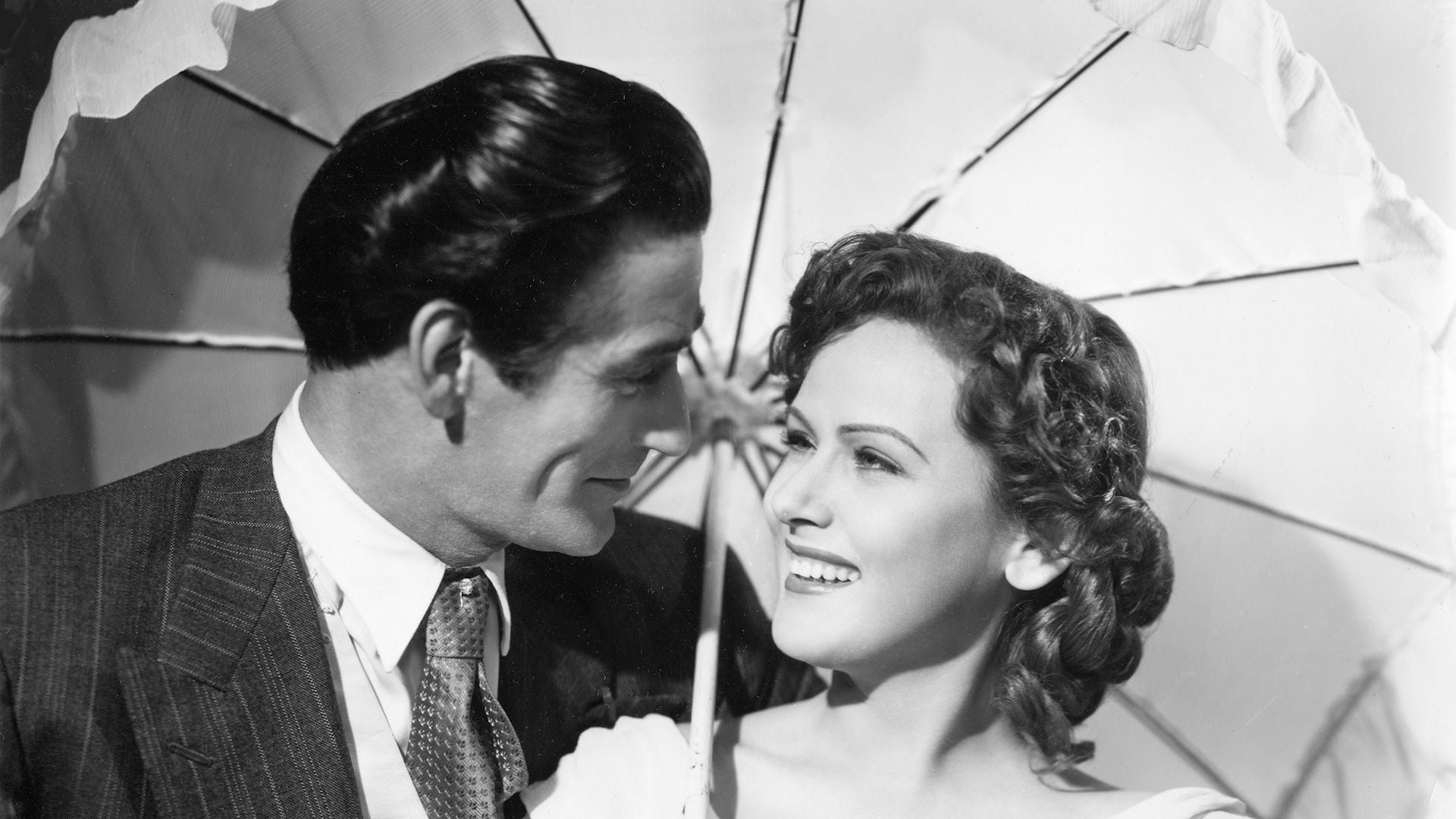
Discover The Spider and the Fly, the 1949 British crime film directed by Robert Hamer and starring Eric Portman, Guy Rolfe, and Nadia Gray, now available as a professionally colorized version. The screenplay concerns an unusual love triangle that develops between two criminals and a policeman on the eve of the First World War. It was written by Robert Westerby. Hamer made it immediately after Kind Hearts and Coronets (1949). In 1913, Fernand Maubert, the dedicated chief of police of Paris, is pursuing Philippe Ledocq, a suave bank robber suspected of a series of thefts, but the criminal always has an alibi. After the latest robbery, Maubert does capture Ledocq’s accomplice, Madeleine Saincaise. When she is released from prison, Maubert warns her to stay away from Ledocq (though he has a certain admiration for the man). Impressed by her intelligence, beauty and courage, he begins to court her himself. When Ledocq visits her, she professes her love for him, but he tells her that it is too dangerous for them to be seen together and that they would eventually tire of each other anyway. Later, however, during one of their cordial occasional meetings, Maubert tells Ledocq that he can tell that Madeleine is different from Ledocq’s other women; she has got under his skin. This crime drama combines romance and intrigue with the looming shadow of war as a policeman and a thief compete for the heart of a woman while nations march toward conflict. Own this classic movie in color as a DRM-free MP4 digital download for just €15.00.
In 1913, Fernand Maubert, the dedicated chief of police of Paris, is pursuing Philippe Ledocq, a suave bank robber suspected of a series of thefts, but the criminal always has an alibi. After the latest robbery, Maubert does capture Ledocq’s accomplice, Madeleine Saincaise.
When she is released from prison, Maubert warns her to stay away from Ledocq (though he has a certain admiration for the man). Impressed by her intelligence, beauty and courage, he begins to court her himself. When Ledocq visits her, she professes her love for him, but he tells her that it is too dangerous for them to be seen together and that they would eventually tire of each other anyway. Later, however, during one of their cordial occasional meetings, Maubert tells Ledocq that he can tell that Madeleine is different from Ledocq’s other women; she has got under his skin.
Later, the police are tipped off by an informant and arrive during an attempted theft. Ledocq gets away, but his assistant Jean Louis is killed, along with a policeman. Ledocq persuades Madeleine to provide him with an alibi. Maubert knows she is lying, but cannot prove it. However, he does stop seeing her.
Finally, Maubert gets the break he has been waiting for. Ledocq employs Jean Louis’s brother Alfred for his next theft. Maubert gets Alfred to betray Ledocq, not out of revenge for his brother’s death, but by telling him falsely that Ledocq did not give his mother Jean’s fair share of the loot. Ledocq is imprisoned just as World War I breaks out.
During the war, Maubert becomes a major in French counterintelligence. When the Minister of War tells him that they urgently need a list of German spies in France being kept in a safe in the German embassy in neutral Bern, Switzerland, Maubert states there is only one man for the job. Maubert is authorized to offer a pardon to Ledocq in exchange for his services. The prisoner agrees after Maubert dangles the prospect of seeing Madeleine.
The theft goes off without a hitch. However, when Ledocq goes to Madeleine’s flat, he finds a despondent Maubert already there. In a surprise twist, it turns out that Madeleine’s name was on the list they stole. She is taken away, with the implication that she will be executed for treason. In the final scene, Maubert watches Ledocq, now an anonymous French soldier, board a train for the intense fighting at Verdun, both knowing that Ledocq stands little chance of survival.
The Spider and the Fly presents a complex study of professional rivalry, romantic obsession, and moral ambiguity set against the backdrop of pre-war Paris. Fernand Maubert is not a simple antagonist to Philippe Ledocq’s criminal; he is a man of intelligence and dedication who harbors a grudging respect for the very criminal he pursues. This mutual respect between lawman and outlaw is one of the film’s most intriguing elements, suggesting that both men are professionals who understand and even admire each other’s skills.
Madeleine Saincaise occupies the center of the film’s emotional triangle. A former accomplice of Ledocq, she is released from prison and finds herself caught between two powerful men—one who represents the law and one who represents its opposite. Maubert’s courtship of Madeleine begins as a form of professional strategy, a way to keep her away from Ledocq, but it gradually transforms into genuine affection. Ledocq’s feelings for Madeleine are more complex; he is drawn to her but also believes that the danger of their relationship and the eventual boredom that follows would destroy them both.
The film’s wartime twist elevates it beyond a simple crime story. When World War I breaks out, the professional rivalry between Maubert and Ledocq becomes part of the larger conflict consuming Europe. Maubert’s offer of a pardon in exchange for a dangerous mission to neutral Switzerland creates a new dynamic: the master thief must use his skills for the state that has imprisoned him. This scenario reflects the way nations sometimes must ally with unlikely partners during times of crisis, and how individual talents can be redirected by larger historical forces.
The final revelation that Madeleine’s name appears on the list of German spies represents a devastating twist that recontextualizes everything that has come before. The woman both men have loved and fought over is revealed to be playing a deeper game, involved with the very enemy France is fighting. The implication that she will be executed for treason brings the story to a tragic conclusion, while Ledocq’s reassignment to the fighting at Verdun suggests that even those who survive the war’s political machinations will not survive the war itself.
Director: Robert Hamer
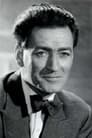
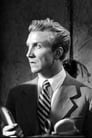
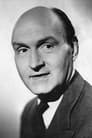
Stars: Eric Portman, Guy Rolfe, Nadia Gray
The Spider and the Fly was originally filmed in black and white, with cinematography that captured the elegant streets of pre-war Paris and the atmospheric interiors of apartments, police offices, and prisons. This professionally colorized restoration enhances every scene with frame-by-frame precision, from the gaslit boulevards of 1913 Paris to the period-accurate costumes and settings that transport viewers to the eve of the First World War. The colorized version reveals new visual richness in the film’s settings, where the 1910s fashion, the contrasts between bourgeois interiors and criminal hideaways, and the wartime scenes gain authenticity that brings the period to life. Eric Portman’s performance as the dedicated and morally complex Chief Maubert gains additional dimension in color, his portrayal of a man torn between duty and desire becoming even more nuanced. Guy Rolfe’s suave Philippe Ledocq benefits from colorization that highlights the charm and danger of the aristocratic thief, while Nadia Gray’s Madeleine Saincaise becomes more luminous and tragic in color, her beauty and mystery embodying the romantic core of the film. The film’s Paris location shooting, combined with its Pinewood Studios interiors, creates a richly detailed world that colorization makes more accessible to modern audiences. Now also available in colour.
Buy The Spider and the Fly in color today for just €15.00. Your DRM-free MP4 download is available for instant access.
Released in 1949, The Spider and the Fly represents an important work from director Robert Hamer, made immediately after his masterpiece Kind Hearts and Coronets (1949). While Kind Hearts and Coronets would become the more famous film, The Spider and the Fly demonstrates Hamer’s versatility and his interest in morally complex characters operating in morally complex situations. The film’s production at Mayflower Productions, a company originally established by Charles Laughton and Eric Pommer in the 1930s but reactivated by producers Maxwell Setton and Aubrey Baring, reflects the reorganizing British film industry in the post-war period.
The film was the first production of the Setton-Baring team at Mayflower, and it began a series of six films they would make together, most of which were written by Robert Westerby. Westerby’s screenplay for The Spider and the Fly was based on a true story told to him by a member of the French police, giving the narrative an unusual authenticity. The film’s unusual combination of crime story, romantic triangle, and historical drama set against the outbreak of World War I makes it a distinctive entry in British cinema of the late 1940s.
The casting of Nadia Gray adds a particular historical resonance to the film. The Romanian actress had spent part of World War II in a German concentration camp, and her experience of the war undoubtedly informed her portrayal of a woman caught between dangerous forces. She was cast after being seen by Anthony Havelock-Allan during a Paris stage production of Noël Coward’s Present Laughter. Her presence in the film connects the personal history of its performers to the themes of war, survival, and moral compromise that animate the story.
Eric Portman, one of Britain’s most respected actors, returned to film after more than a year away during which he had achieved great success on the London stage in a double bill of Terence Rattigan plays called Playbill. His performance as Maubert showcases the depth and intelligence that made him one of the leading actors of his generation. Guy Rolfe, in his third leading role, brings a sophisticated menace to the character of Ledocq, establishing himself as a capable leading man.
The film’s production involved location shooting in Paris over three weeks, followed by studio work at Pinewood Studios in London. The production design by Edward Carrick and the period costumes by Elizabeth Haffenden contributed to the film’s authentic atmosphere. It was also Seth Holt’s first film as lead editor, marking the beginning of a significant career in British cinema.
The Spider and the Fly also has an interesting place in Alfred Hitchcock’s history: in October 1948, Hitchcock announced that he would make the film as part of a slate of three pictures for Transatlantic Pictures, but the project ultimately went to Robert Hamer and Mayflower. This connection to Hitchcock, even though the film was not made by him, suggests the story’s potential for suspense and moral complexity that would have appealed to the master of suspense.
The film’s critical reception at the time was mixed, with the Monthly Film Bulletin noting that it “falls between melodrama and something deeper—a study of human relationships.” This assessment captures the film’s enduring interest: it is not simply a thriller or a romance, but a character study of three people caught in a web of professional duty, criminal skill, and romantic obsession, all set against the looming catastrophe of World War I. Through modern colorization, this underappreciated British crime drama reaches new audiences who can appreciate Eric Portman, Guy Rolfe, and Nadia Gray’s performances, its sophisticated storytelling, and its place in the history of post-war British cinema. Now also available en couleur.
Q: Who stars in The Spider and the Fly?
A: Eric Portman, Guy Rolfe, and Nadia Gray star in this British crime drama.
Q: What is The Spider and the Fly about?
A: The film follows a love triangle between a Paris police chief, a suave bank robber, and a female accomplice on the eve of World War I.
Q: Who directed The Spider and the Fly?
A: Robert Hamer directed the film, with a screenplay by Robert Westerby.
Q: What format is the download?
A: The film is delivered as MP4 and MKV files that play on virtually any device.
Q: Is there DRM on the file?
A: No. The download is completely DRM-free so you can watch it on any device without restrictions.
Q: How quickly can I watch after purchase?
A: Your download link is available instantly after payment, so you can start watching within minutes.