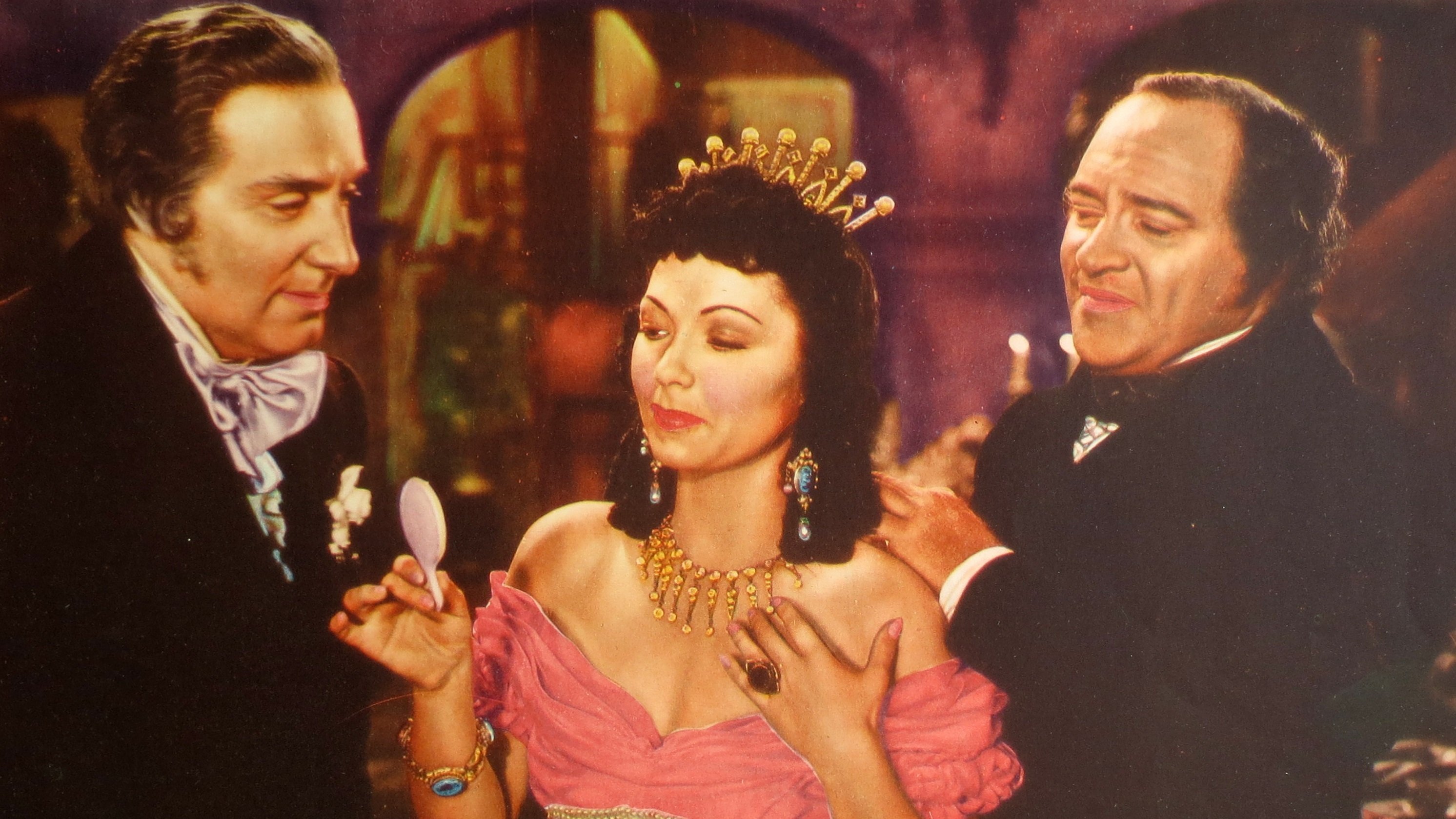
Treasure Island (1934) Colorized 1934


🎥 Check more movies by director Leslie Goodwins
⭐ Check more movies starring Bobby Breen
⭐ Check more movies starring Alan Mowbray
⭐ Check more movies starring Ralph Morgan
Way Down South (1939), the crime classic starring Bobby Breen and Alan Mowbray, was originally released in black and white — no official colour version was ever produced by the studio. What you are looking at is the professionally colorized restoration: every frame recoloured, available as an instant DRM-free HD (720p) download. You can judge it yourself — the colour preview plays on this page before you buy.
Experience the musical Way Down South (1939) in stunning colorized HD. Directed by Bernard Vorhaus, this Depression-era musical drama stars Bobby Breen, the popular child singer, as Timothy Reed, a young plantation heir in the antebellum South who inherits his father’s Louisiana estate and discovers that the plantation overseer, Simon Doolittle (Edwin Maxwell), has been cruelly mistreating the enslaved people who work the land. Rather than accept the overseer’s tyranny, Timothy — with the courage that only a child’s sense of justice can inspire — fights to protect the people his father treated with kindness and compassion. The film features songs by the great Langston Hughes and Clarence Muse, including several performances by the Hall Johnson Choir, creating a musical tapestry that blends spirituals, folk songs, and original compositions. Now available as a premium digital download for just €15.00 — DRM-free and yours to keep forever.
Timothy Reed is a young boy living a comfortable life in New Orleans with his wealthy planter father, who runs his Louisiana plantation with unusual kindness and genuine concern for the welfare of all who live and work there. When his father dies unexpectedly, Timothy inherits the estate and is sent to live on the plantation under the guardianship of Simon Doolittle, the overseer his father trusted to manage day-to-day affairs.
Timothy quickly discovers that Doolittle is nothing like the man his father believed him to be. In the master’s absence, the overseer has imposed a regime of cruelty, working the field hands beyond endurance, withholding food and rest, and enriching himself at the estate’s expense. The enslaved people, who loved Timothy’s father for his kindness, look to the young heir with desperate hope — but Timothy is a child, and Doolittle holds the real power.
Determined to honour his father’s memory and protect the people who depend on him, Timothy embarks on a campaign to overthrow the overseer’s authority. Despite his youth, he finds allies among the community and must use his wits, his courage, and his faith in justice to restore decency to the plantation. The musical numbers — performed by Bobby Breen’s clear soprano and the magnificent Hall Johnson Choir — provide emotional commentary on the story’s themes of justice, compassion, and the enduring power of hope in the face of oppression.
The film reaches its climax when Timothy must confront Doolittle directly, risking his own safety to expose the overseer’s crimes and reclaim the estate his father entrusted to him.
Director: Bernard Vorhaus
Stars: Bobby Breen, Alan Mowbray, Ralph Morgan, Clarence Muse, Edwin Maxwell, Steffie Duna, Sally Blane, Hall Johnson Choir
Screenplay: Clarence Muse, Langston Hughes
Bobby Breen — one of the most popular child performers of the 1930s — carries the film with his remarkable singing voice and natural screen presence. Clarence Muse, the pioneering African-American actor who co-wrote the screenplay with Langston Hughes, brings dignity and depth to his role while also contributing to the film’s musical score.
The antebellum Louisiana setting — the Spanish moss-draped live oaks, the cotton fields, the plantation house, the rich earth tones of the rural landscape — gains extraordinary visual beauty through expert colorization. The musical performances, particularly the choir sequences filmed in atmospheric outdoor settings, become even more visually stunning when the warm southern light, the green foliage, and the period costumes are rendered in full colour. The contrast between the beauty of the physical landscape and the cruelty of the social system it supports becomes even more powerful when seen in colour. Now also available in colour. Own this unique musical drama for just €15.00 — where a child’s voice speaks for justice.
Way Down South holds a unique place in Hollywood history as one of the few 1930s films with an African-American screenwriting credit. Clarence Muse and Langston Hughes — the latter one of the greatest American poets of the twentieth century — wrote the screenplay, bringing a perspective to the antebellum setting that was rare in Depression-era Hollywood. While the film necessarily operates within the constraints of its era’s racial attitudes, the Hughes-Muse script incorporates moments of dignity, resistance, and cultural pride that were unusual for the period. The Hall Johnson Choir’s performances preserve African-American musical traditions with an authenticity that transcends the film’s commercial context. Bobby Breen’s box-office popularity ensured wide distribution, bringing these perspectives to mainstream audiences. Through colorization, this historically significant musical drama has been preserved for modern audiences.
Q: Who wrote the screenplay?
A: The screenplay was co-written by Langston Hughes, one of America’s greatest poets, and Clarence Muse, a pioneering African-American actor — making this one of the few 1930s Hollywood films with an African-American screenwriting credit.
Q: Is Bobby Breen a good singer?
A: Remarkable — Breen was one of the most popular child performers of the 1930s, with a clear, powerful soprano voice that carries the film’s musical numbers with impressive skill for a young performer.
Q: How does this film handle racial themes?
A: Within the constraints of 1930s Hollywood, the Hughes-Muse script incorporates moments of dignity and cultural pride for its African-American characters that were unusual for the era, particularly in the choir performances.
Q: What format is the download?
A: The film is delivered as a high-quality MP4 file in 720p HD resolution, compatible with all major devices and media players.
Q: Is there DRM on this download?
A: No. The download is completely DRM-free, meaning you can watch it on any device without restrictions or expiration dates.
Q: How quickly can I watch after purchasing?
A: Your download link is available immediately after payment. You can start watching within minutes of completing your purchase.